
"education charity"
100 article(s) found

Rwandan coffee is the best coffee in Rwanda.
Rwandans have been growing coffee since colonial times, but until 1999, the product was classified as below grade C and was not available on the global market. The reason for the poor quality is that farmers do not have a fixed procedure for cleaning coffee beans, and they do not process coffee fruits according to specifications in time. Buyers pay $0.33 a kilo for coffee beans, farmers keep warm on meager profits from low prices

Boutique Coffee Rwanda Coffee Manor 1756 members small farmers
Rwandans have been growing coffee since colonial times, but until 1999, its products were still classified as below Class C and were not popular in the global market. The reason for the poor quality is that farmers do not have a fixed procedure for washing coffee beans and do not process coffee fruits according to specifications in time. Buyers buy coffee beans at $0.33 per kilogram, and farmers keep warm by the meagre profits earned at low prices.
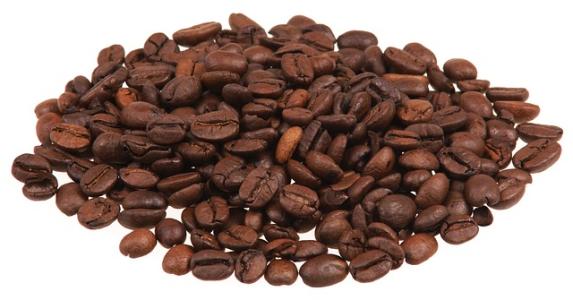
An introduction to the Historical Origin of Malaba Coffee in Rwanda
Following caf é (Wechat official account vdailycom) found that Malaba Coffee, Rwanda Malaba Coffee (Rwandan: Ikawa ya Maraba, French: Caf de Maraba) is a fair trade certified coffee grown in Malaba area of southern Rwanda. The coffee crop of Malaba is a bourbon variety of Arabica species.

Brief introduction of Rwanda Coffee beans how much is the coffee bean per jin
Malaba Coffee (Rwandan: Ikawa ya Maraba, French: Caf de Maraba) is Fairtrade certified coffee grown in the Malaba area of southern Rwanda. Malaba's coffee crop is a bourbon of the Arabica species and is grown in fertile volcanic soil on high-altitude hills. The fruits of coffee trees are mainly picked manually during the rainy season from March to May.

Boutique coffee Rwanda coffee flavor red apple, cherry, cinnamon, honey
Rwandans have been growing coffee since colonial times, but until 1999, its products were still classified as below Class C and were not popular in the global market. The reason for the poor quality is that farmers do not have a fixed procedure for washing coffee beans and do not process coffee fruits according to specifications in time. Buyers buy coffee beans at $0.33 per kilogram, and farmers keep warm by the meagre profits earned at low prices.

Fine coffee Rwanda coffee producing area Western Province Lutexiluo producing area
Rwandans have been growing coffee since colonial times, but until 1999, the product was classified as below grade C and was not available on the global market. The reason for the poor quality is that farmers do not have a fixed procedure for cleaning coffee beans, and they do not process coffee fruits according to specifications in time. Buyers pay $0.33 a kilo for coffee beans, farmers keep warm on meager profits from low prices

Fine coffee Rwanda coffee treatment method washing, elevated scaffolding sun drying
Rwandans have been growing coffee since colonial times, but until 1999, its products were still classified as below Class C and were not popular in the global market. The reason for the poor quality is that farmers do not have a fixed procedure for washing coffee beans and do not process coffee fruits according to specifications in time. Buyers buy coffee beans at $0.33 per kilogram, and farmers keep warm by the meagre profits earned at low prices.

Coffee common sense Children who drink energy drinks are easily addicted to caffeine
If students drink too much caffeinated drinks, they may have chest pain, headache, hyperactivity and so on. In addition, energy drinks can also encourage some students to behave badly, making it more difficult for teachers to control. British experts say that as energy drinks are popular among teenagers, more and more people are addicted to caffeine. British media reported on the 2nd that some studies have shown

Rwanda Coffee Plantation Rwanda Coffee Region
Rwandans have been growing coffee since colonial times, but until 1999, the product was classified as below grade C and was not available on the global market. The reason for the poor quality is that farmers do not have a fixed procedure for cleaning coffee beans, and they do not process coffee fruits according to specifications in time. Buyers pay $0.33 a kilo for coffee beans, farmers keep warm on the meager margins they earn at low prices
The decline and rise of the coffee economy in Zimbabwe the coffee industry in Zimbabwe is slowly recovering
[photo: Shutterstock] Zimbabwe, a small country about the size of California, is home to some of Africa's richest coffee belts. Here, the conditions for growing coffee beans are perfect: high mountains, lush valleys and a cool climate. This country was once famous for its SHQ coffee, which slowly dries and tastes.

Acid Charming Berman Estate Fine Coffee Bean Variety Planting Market Price Profile
Kenya Coffee Kenya borders Ethiopia to the north, where the Arabica coffee tree originated, but coffee cultivation did not begin until the early twentieth century. Missionaries introduced the Arabica tree from Yemen in the nineteenth century, but it was not cultivated in large quantities until 1893, when the ancient Brazilian bourbon coffee seed was introduced. Coffee was cultivated on a large scale, that is, today's Ke
Citrus fruity Berman Estate Fine coffee beans cultivation Location Climate Elevation Profile
There are two types of coffee farms in Kenya. One is a large plantation covering more than five acres, but the average elevation is lower. For Kenya coffee, the coffee beans of the large farm are only moderate in quality. The best Kenyan beans are grown on small farms, mostly in the foothills or firehills above five or six thousand feet. Each small farmer can produce only about 20 to 70 bags per season.

Kenya Berman Estate Fine Coffee Bean Variety Planting Market Price Profile
Kenyan beans taste very different from Brazilian beans. Brazilian coffee is grown at low altitudes, with soft texture and no obvious fruit acid flavor. Kenyan coffee trees, on the other hand, are concentrated on slopes near Mount Kenya, about 4,000 feet to 6,500 feet above sea level, which is suitable for coffee bean flavor development, because the mountain temperature is lower and the growth is slower, and the aromatic components of coffee beans are fully developed.

Berman Estate Coffee Bean Varieties with Moderate Alcohol Quality
The Senate is composed of the President and 68 senators, of whom 47 are elected (one for each county), 16 are women (designated according to the proportion of seats held by political parties in the Senate), 2 are young members (one male and one female), and 2 are members representing persons with disabilities (one male and one female). The President and Deputy President of the Senate are nominated by each party from among its own non-members and members, respectively, and elected by the full Senate. Senate President

A brief introduction to the Market Price of Fine Coffee Bean varieties in Berman Manor
Kenya is divided into seven provinces (PROVINCE) and one provincial special district (Nairobi province). The following provinces are divided into districts (DISTRICT), townships (DIVISION) and villages (LOCATION). Under the new constitution, the four-tier administrative structure will be changed to the central and county (COUNTY) levels. The 47 counties established under the new constitution will be officially operational after the 2013 general election. The seven provinces are: central Kenya

A brief introduction to the Market Price of Fine Coffee beans in Berman Manor
The capital Nairobi, with an area of 648 square kilometers, 1680 meters above sea level and a population of 3 million, is the political, economic, cultural, industrial and transportation center of the country. it has been designated as the capital since 1907 and is one of the international cities in Africa. Kenya has a total population of 41.8 million (2013), with a population growth rate of 2.7 per cent. There are 42 ethnic groups in China, mainly Kikuyu (17%) and Lucia (

Citrus fruity Berman Estate Fine Coffee Bean Origin Development History Culture Introduction
The coastal terrain is plain, and most of the rest is plateau with an average altitude of 1500 meters. The east branch of the Great Rift Valley cuts the plateau vertically from north to south, dividing the plateau into east and west parts. The valley floor of the Great Rift Valley is 4501000 meters below the plateau and 50100 kilometers wide. There are lakes of varying depths and many volcanoes. The northern part is desert and semi-desert zone, accounting for about 56% of the total area of the country. in

A brief introduction to the Origin, Development, History and Culture of Fine Coffee beans in Berman Manor
Implement the presidential system. The cabinet is composed of 26 members, including the President, the Vice President, ministers and the Attorney General. The current cabinet was established in June 2013 and is composed of the President, the Vice President, ministers and the Attorney General. The cabinet list is as follows: president Uhuru Kenyatta (Uhuru Kenyatta), Vice President William Luto (William Ruto), Ministry of Interior and Central Government Coordination

A brief introduction to the planting of fine coffee beans in Berman Manor, geographical location, climate and altitude
Kenya is divided into seven provinces (PROVINCE) and one provincial special district (Nairobi province). The following provinces are divided into districts (DISTRICT), townships (DIVISION) and villages (LOCATION). Under the new constitution, the four-tier administrative structure will be changed to the central and county (COUNTY) levels. The 47 counties established under the new constitution will be officially operational after the 2013 general election. The seven provinces are: central Kenya

A brief introduction to the flavor, taste and aroma characteristics of coffee beans in Berman Manor
The flavor of Kenyan beans is very different from that of Brazilian beans. Brazilian coffee is planted at a low altitude, with soft texture and no obvious sour taste. In contrast, Kenyan coffee trees are mainly concentrated on the slopes near Mount Kenya, about 4 to 6500 feet above sea level, which is suitable for coffee beans to develop their flavor, because the mountain temperature is low and the growth is slow, and the aromatic components of coffee beans are fully developed. Fruit